Accidents and injuries involving ligaments and tendons are common and require effective restorative materials to fully recover their functionality. However, engineering tissue structures using biocompatible materials that closely mimic natural tissue remains a major challenge. In their latest research, Nikos Karathanasopoulos and Oraib Al-Ketan from New York University Abu Dhabi explored the use of metamaterial architectures to address this issue. By utilizing micro 3D printing technology, they successfully designed and tested innovative metamaterials with promising mechanical properties.
Additive Manufacturing for Metamaterial Architectures
Karathanasopoulos and Al-Ketan sought additive manufacturing solutions by testing six different metamaterial cell architectures. These structures needed to be strong enough to withstand normal loading while remaining flexible during shear testing, and also capable of greater contraction compared to conventional engineered materials.
To meet these requirements, the researchers used the MicroArch S240 from Boston Micro Fabrication, a high-precision 3D printer capable of producing structures at sub-micron accuracy while maintaining specimen lengths at the millimeter scale. The printed structures included diagonal support elements with diameters as small as 50µm, enabling the creation of highly intricate metamaterial designs.
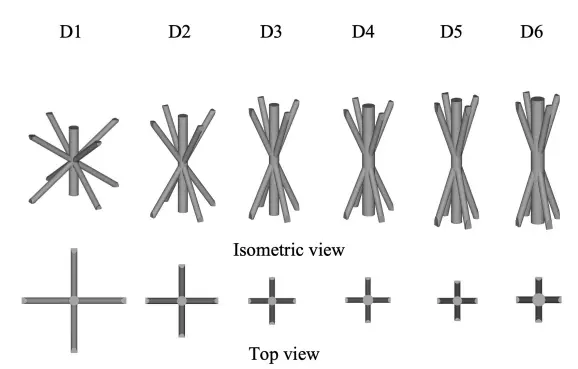
Different Metamaterial Cell Architectures
Identifying the Ideal Metamaterial Design
The researchers successfully identified metamaterial architectures that demonstrated:
- Significant normal stiffness aligned with the primary tissue loading direction
- High shear resistance
- Poisson’s ratio values far exceeding unity
These characteristics make the materials highly suitable for tissue and ligament restoration applications.
Most importantly, the metamaterials exhibited exceptional physical behavior, becoming up to 18 times stiffer under normal loading conditions compared to shear loading. This significantly exceeds the limitations of conventional isotropic engineering materials, which typically only achieve a normal-to-shear loading ratio of around 3.
These findings open new possibilities for advanced architected materials capable of more accurately replicating the mechanical behavior of natural tissues.
Testing and Applications
The metamaterials underwent rigorous testing, including:
- Shear testing
- Uniaxial compression testing
The results demonstrated strong potential for applications in tendon and ligament repair.
Metamaterial architectures may also revolutionize restorative practices by enabling the use of biocompatible materials that closely mimic the mechanics of native tissues, significantly improving post-repair performance.
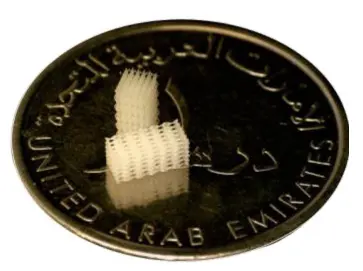
3D Metamaterial Architectures for Tissue and Ligament Engineering
Conclusion
The work of Nikos Karathanasopoulos and Oraib Al-Ketan at New York University Abu Dhabi represents a significant advancement in tissue and ligament restoration research.
By leveraging micro 3D printing technology, the researchers successfully designed and tested metamaterial architectures that closely resemble natural tissue behavior. These advanced engineered materials offer substantially increased stiffness under normal loading compared to shear loading — a critical characteristic for tissue repair applications.
As this field continues to evolve, the research could reshape the future of tissue engineering and regenerative medicine, benefiting many patients suffering from tendon and ligament injuries. The potential applications of these metamaterials extend beyond medical use into broader engineering applications requiring advanced mechanical performance.
The MicroArch S240 from Boston Micro Fabrication has proven instrumental in bringing these concepts to life, demonstrating the importance of advanced additive manufacturing technologies in advancing biomedical research and material science.
Micro 3D Printer Supplier in Indonesia
The MicroArch S240 from Boston Micro Fabrication, with its micro-scale printing capabilities, can support the development of tissue engineering structures that closely resemble natural tissue.
Maha Chemicals is the official distributor of MicroArch S240 in Indonesia. Contact us to learn more about the right 3D printing solution for your application. Contact Us!
Need more support?
Let's connect!
We'll get in touch within 1 working day.
HQ Office & Laboratory
51 Tuas West Drive
Singapore 638415
Operating Hours
Monday – Friday | 8:00AM – 5:00PM
Contact
sales@dash-asia.co