What is Microfluidics?
Microfluidics is the study of fluid behavior within microscale channels, playing a critical role in medical diagnostics and laboratory applications.
To handle liquid samples at concentrations as low as one part per million (1 ppm) or less, microfluidic devices (MFDs) provide a fast, safe, and cost-effective method for sequencing DNA (genomics) and RNA (transcriptomics). These compact diagnostic devices are also used for protein characterization (proteomics) and metabolite analysis (metabolomics). With lab-on-a-chip (LOC) technology, extremely small fluid volumes can be measured in femtoliters (fL), or one quadrillionth of a liter.
So, Why is Microfluidics Important?
Size:
When working with microfluidics, the same discoveries can be achieved using much smaller sample volumes. Experiments performed at smaller scales reduce sample waste significantly.
Time
Reactions occur faster with smaller samples. Microfluidic experiments require shorter processing times, allowing results to be observed more quickly. Multiple analyses can also be conducted simultaneously.
Cost
Microfluidics is more cost-efficient because it uses smaller sample volumes and requires less time to complete experiments.
3D Printing for Microfluidics
3D printing can produce highly intricate structures such as microfluidic devices. However, only a few technologies are capable of manufacturing microscale components with fine features and tight tolerances at the required resolution, desired speed, and with polymers that possess the necessary material properties.
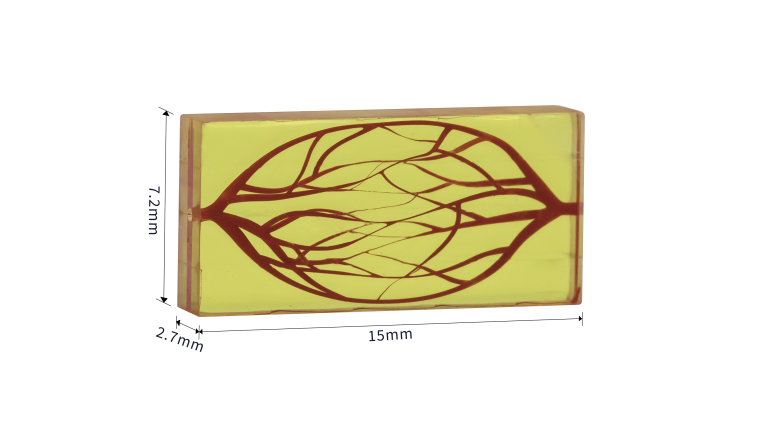
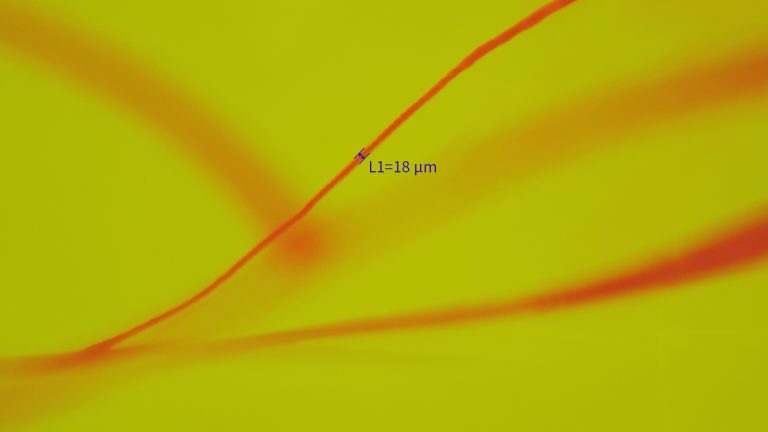
Challenges with Traditional Microfluidic Manufacturing Methods
- Micro injection molding requires expensive precision tooling that can take weeks or even months to manufacture and deliver.
- Soft lithography limits researchers’ ability to create complex 3D channels, especially for designers aiming to produce microchannels with diameters below 100 microns (μm) and high aspect ratios.
- Lamination requires cutting desired microfluidic features into separate layers and then bonding these layers together to create a functional unit in a labor-intensive and time-consuming multi-step process.
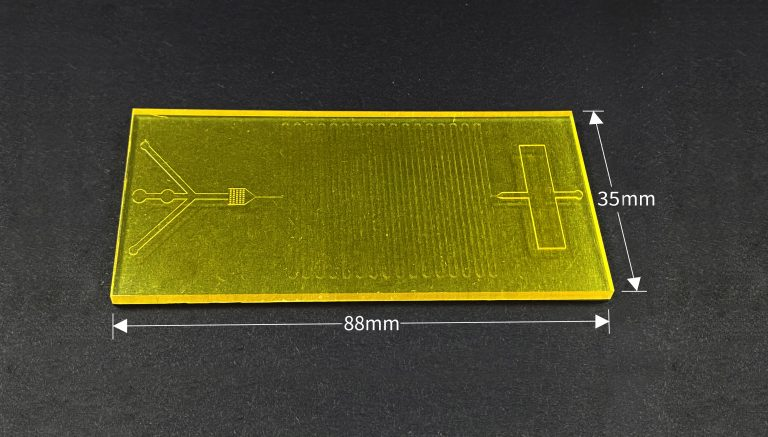
Projection Micro Stereolithography (PμSL)
Projection Micro Stereolithography (PμSL), a patented stereolithography (SLA) technology commercialized by Boston Micro Fabrication (BMF), provides an ideal balance between speed and precision.
PμSL also supports the use of specialty polymers with properties such as:
- High temperature resistance
- Chemical resistance
- Biocompatibility
Additionally, PμSL can produce complete microfluidic devices (MFDs) with excellent surface finish quality, enabling precise fluid flow. These compact devices can be used for both prototyping and end-use production.
Beyond manufacturing complete MFDs, BMF’s microArch 3D printers also support the production of highly precise micro-tools for soft lithography. These systems are capable of producing components with resolutions as small as 2μm and accuracy within ±10μm at scale.
Learn More About PμSL
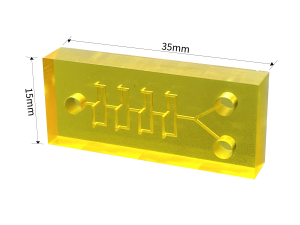
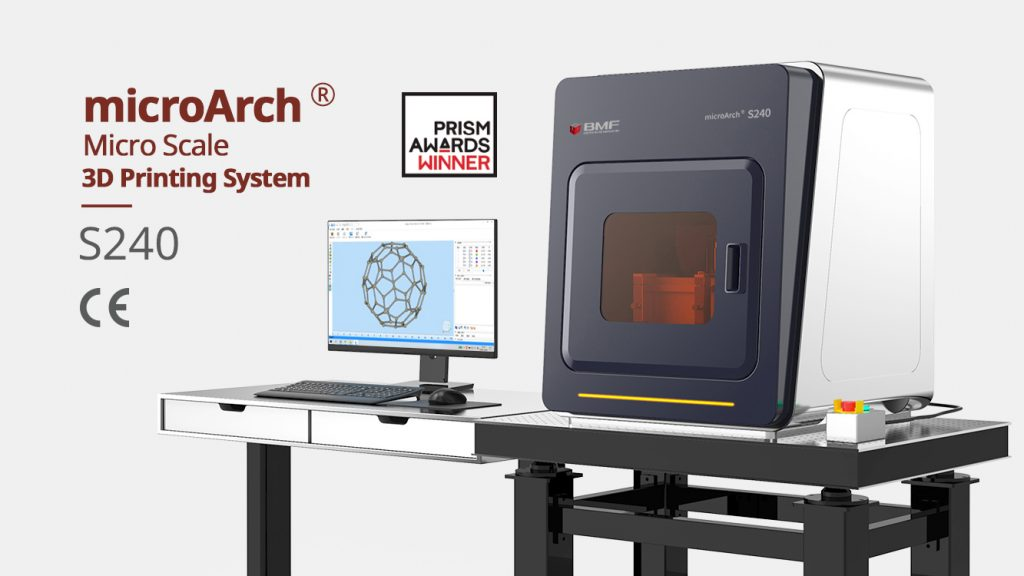
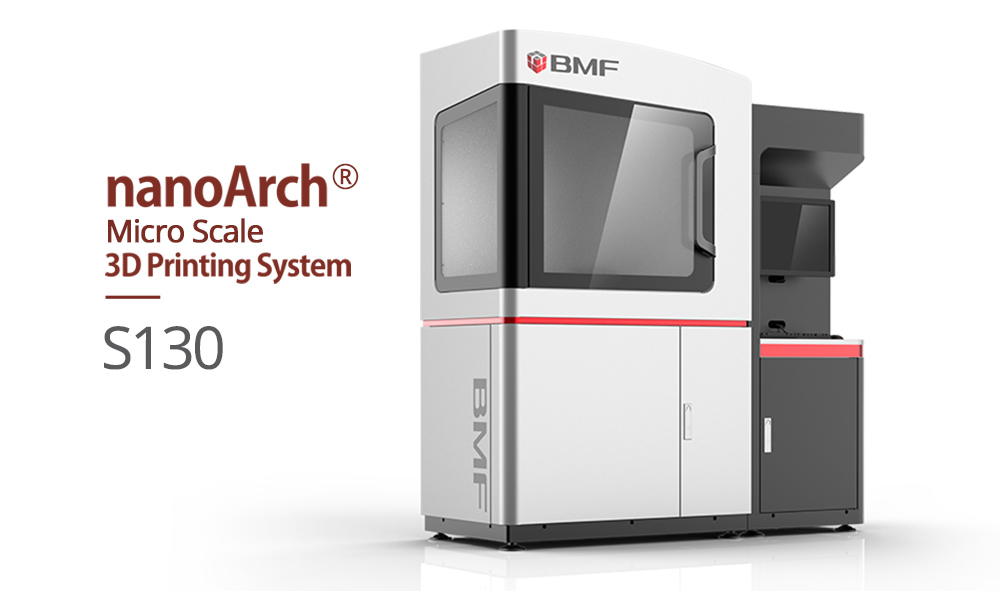
The microArch family of 3D printers also enables highly complex designs while supporting the use of resins that meet microfluidic application requirements. Boston Micro Fabrication’s UV-curable materials include acrylate-based resins that combine biocompatibility, high-temperature resistance, and chemical resistance for microfluidic applications such as single-cell analysis and digital PCR.
To learn more about PμSL micro 3D printing for single-cell testing and digital PCR applications, feel free to contact us with any inquiries.
Need more support?
Let's connect!
We'll get in touch within 1 working day.
HQ Office & Laboratory
51 Tuas West Drive
Singapore 638415
Operating Hours
Monday – Friday | 8:00AM – 5:00PM
Contact
sales@dash-asia.co